Case Study

A Smarter Testing System for Conversion Optimization

Team + Business

The Problem

Landing page performance was inconsistent across campaigns due to a lack of standardized testing framework. Teams relied on subjective decisions, leading to missed optimization opportunities and inefficient spend.
Role

Led the development and rollout of a structured landing page testing system and process for the department to use across all client accounts.
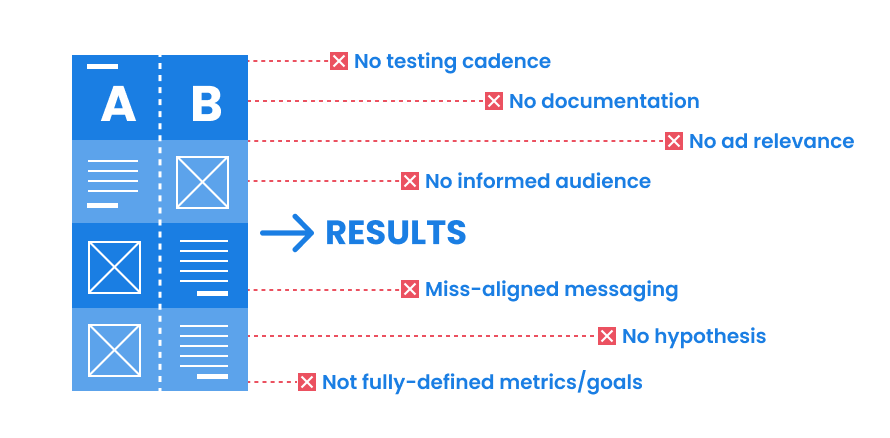
From not using the right data to inform what to test, to a lack of testing cadence, better campaign alignment, team communication, the list goes on... the entire operational approach to testing needed to be tackled and clearly defined.
-Daniel

Approach

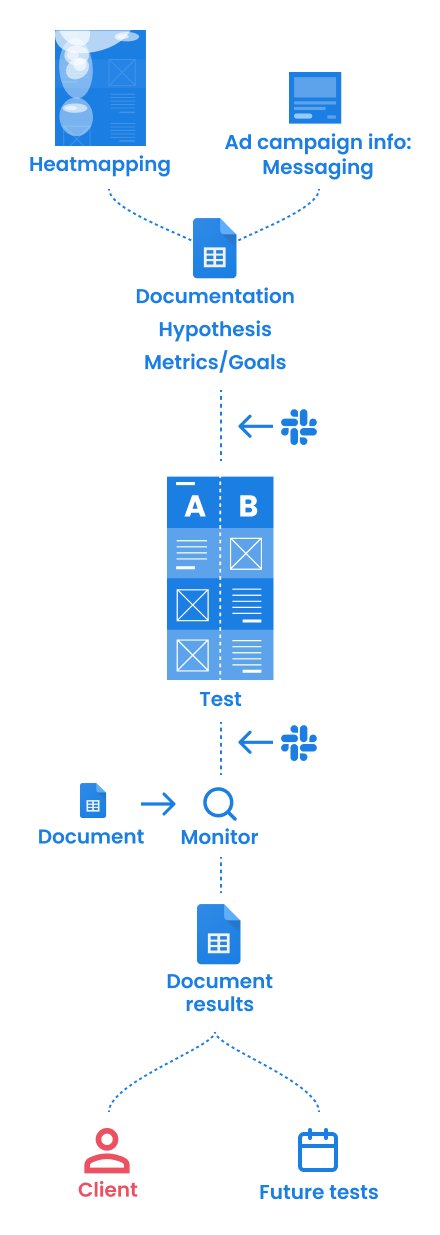
  • Built a repeatable testing framework to standardize a method for ideation, hypothesis generation, identifying proper metrics and conversion action to track, and how to provide actionable results.
  • Ensured testing efforts were prioritized around projected impact and scalability, aligning experimentation with client goals.
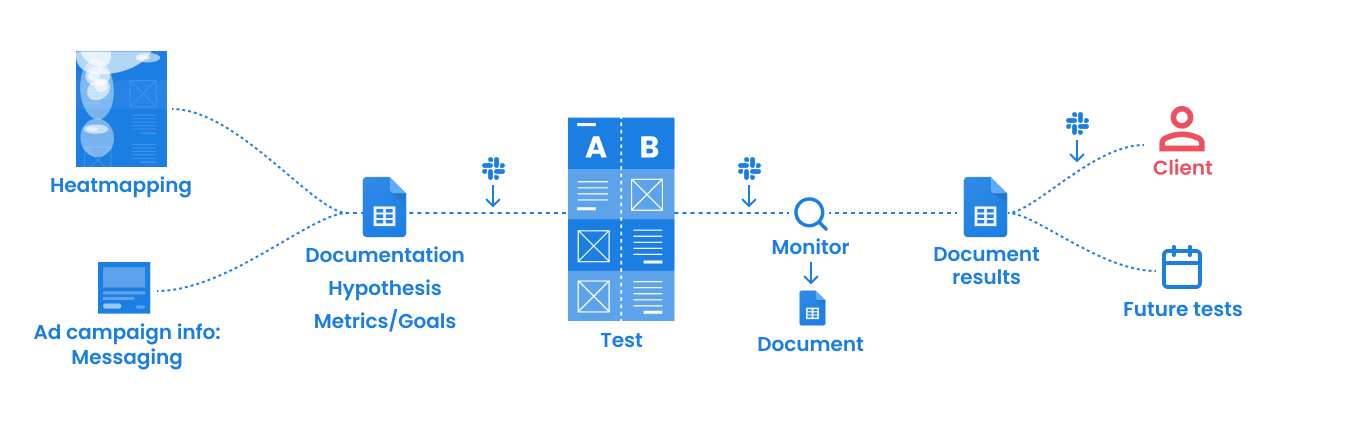
  • Built an operational testing process that included tracking spreadsheets, naming conventions, heatmapping informed decisions, test documentation, and clear cross-department communication and consistent execution across platforms like Unbounce.

Results

  • Improved ability to identify high-performing concepts and scale them.
  • Reduced guesswork in landing page testing decision-making and created more targeted experiments with more clear outcomes.
  • Contributed to measurable performance lifts across multiple accounts with stronger conversion lifts, lower CPA and higher ROAS.
  • A clearer testing structure paved the way for a stronger testing cadence and routine of providing results.
Results from implementing a structured testing process that enabled the team to improve organization, strengthen documentation, enhance communication, and ultimately drive better performance outcomes.
Research
Instead of guessing what could cause a change, the team used previous test data, ad performance and heatmapping.
Hypothesis
Based on the research a problem is discovered and a hypothesis generated using a naming convention.
Test
A test is developed and ran over a duration that ensures statistical significance and that goals are set for the test.
Document Results
Test results are documented, communicated properly to the team and client and future tests are created.

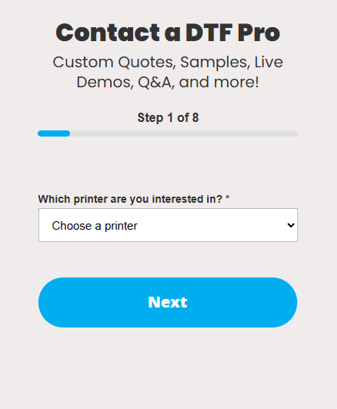
The Problem: The 8-field form’s length created friction in the user experience, with heatmaps showing steady drop-off throughout the completion process. With the client already generating roughly 30–40 conversions per day, this presents both a high-impact opportunity and a fast feedback loop to quickly validate improvements and measure results.

Hypothesis: Breaking the long form into a multi-step experience will reduce perceived effort and friction by creating the illusion of a shorter form, leading to higher completion rates and increased conversions.
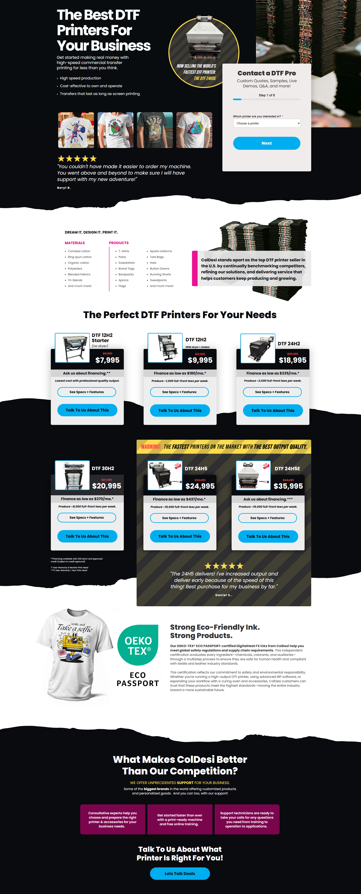
Specific performance data is proprietary to the agency — results reflected consistent improvement across conversion rate and engagement metrics over the campaign period.

~ %

CVR Lift

Baseline CVR: 6%
Goal CVR: 7%
Relative Delta Lift: 16.67%

The Results: The winning multi-step form delivered a 20% CVR lift, surpassing the 16.6% goal. By reducing perceived friction and improving progression through the form, it increased overall submissions while also improving lead quality. This carried through the funnel, contributing to higher lead-to-contact rates and an increase in qualified contacts, strengthening downstream conversion performance.

Interested in working together?